


This roof inspection checklist is for the twice-yearly visual inspection of a commercial roof, in spring and autumn, and after any severe storm. Most roof leaks start at a detail, not in the middle of the roof, so the list concentrates on edges, outlets and penetrations.
Safety comes before the checklist. Do not go onto a roof without a safe means of access, edge protection or a suitable restraint system, and the training to use them. Much of this inspection can be done from access hatches, upper windows, the ground with binoculars, or by drone. If you cannot reach an area safely, record it as not inspected.
Start inside
Walk the top floor before you go up. Ceiling stains, damp patches and musty smells tell you where to look when you get onto the roof. Mark them on a plan.
The roof inspection checklist
1. Top floor interior
| Check | Pass | Fail | Notes |
|---|---|---|---|
| No new stains or damp patches on ceilings | ☐ | ☐ | |
| No stains around rooflights or at wall and ceiling junctions | ☐ | ☐ | |
| No drips or staining in risers below roof penetrations | ☐ | ☐ | |
| Roof void dry, insulation not wet or displaced | ☐ | ☐ |
2. Access and safety
| Check | Pass | Fail | Notes |
|---|---|---|---|
| Access hatch, ladder or stair in safe condition | ☐ | ☐ | |
| Edge protection or anchor points present and tagged in date | ☐ | ☐ | |
| Walkways defined and intact | ☐ | ☐ | |
| Fragile areas such as rooflights marked or protected | ☐ | ☐ |
3. Flat roof covering
| Check | Pass | Fail | Notes |
|---|---|---|---|
| No blisters, splits, cracks or open laps in the membrane | ☐ | ☐ | |
| No ponding 48 hours after rain | ☐ | ☐ | |
| Surface protection (chippings, paint, ballast) in place | ☐ | ☐ | |
| No punctures from foot traffic or dropped tools | ☐ | ☐ | |
| No vegetation or moss growth | ☐ | ☐ |
4. Pitched roof covering
| Check | Pass | Fail | Notes |
|---|---|---|---|
| No slipped, cracked or missing tiles, slates or sheets | ☐ | ☐ | |
| Ridge and hip tiles bedded and secure | ☐ | ☐ | |
| Fixings on metal sheets tight, no corrosion around them | ☐ | ☐ | |
| Valleys clear and undamaged | ☐ | ☐ | |
| No sagging in the roof line | ☐ | ☐ |
5. Edges, flashings and upstands
| Check | Pass | Fail | Notes |
|---|---|---|---|
| Flashings fully fixed and sealed, no lifted edges | ☐ | ☐ | |
| Parapet copings secure, joints sealed | ☐ | ☐ | |
| Upstands at least 150 mm above roof surface and intact | ☐ | ☐ | |
| Sealant at abutments not cracked or missing | ☐ | ☐ | |
| Verges and eaves complete | ☐ | ☐ |
6. Drainage
| Check | Pass | Fail | Notes |
|---|---|---|---|
| Outlets clear, leaf guards in place | ☐ | ☐ | |
| Gutters clean along full length | ☐ | ☐ | |
| Downpipes connected and running freely | ☐ | ☐ | |
| Overflow outlets clear | ☐ | ☐ | |
| No staining on facades below gutters | ☐ | ☐ |
7. Penetrations and plant
| Check | Pass | Fail | Notes |
|---|---|---|---|
| Rooflights uncracked, seals and kerbs sound | ☐ | ☐ | |
| Pipe and cable penetrations sealed with collars intact | ☐ | ☐ | |
| Plant supports not damaging the membrane | ☐ | ☐ | |
| Plant fixings tight, no corrosion at bases | ☐ | ☐ | |
| Solar panel fixings and cable routes secure | ☐ | ☐ | |
| Lightning protection tape continuous and fixed | ☐ | ☐ |
Photographing a roof so the photos are useful
- One overview from each corner. It lets you locate everything else.
- Every outlet, every time. Even when clear. Next year you will want to compare.
- Defects with scale and a location reference. A split membrane looks the same everywhere. Include a nearby rooflight or plant unit in the wide shot.
- Mark the plan. A roof plan with numbered photo positions is worth more than fifty unlabelled images.
Sorting what you find
| Priority | Examples | Response |
|---|---|---|
| Urgent | Active leak, open lap, blocked outlet with standing water, loose coping | Make safe or temporary repair within days |
| Planned | Blisters, failing sealant, minor flashing defects, early corrosion | Repair before the next winter |
| Monitor | Surface wear, slight ponding, moss | Photograph and compare at the next inspection |
Twice a year, same list, same photos
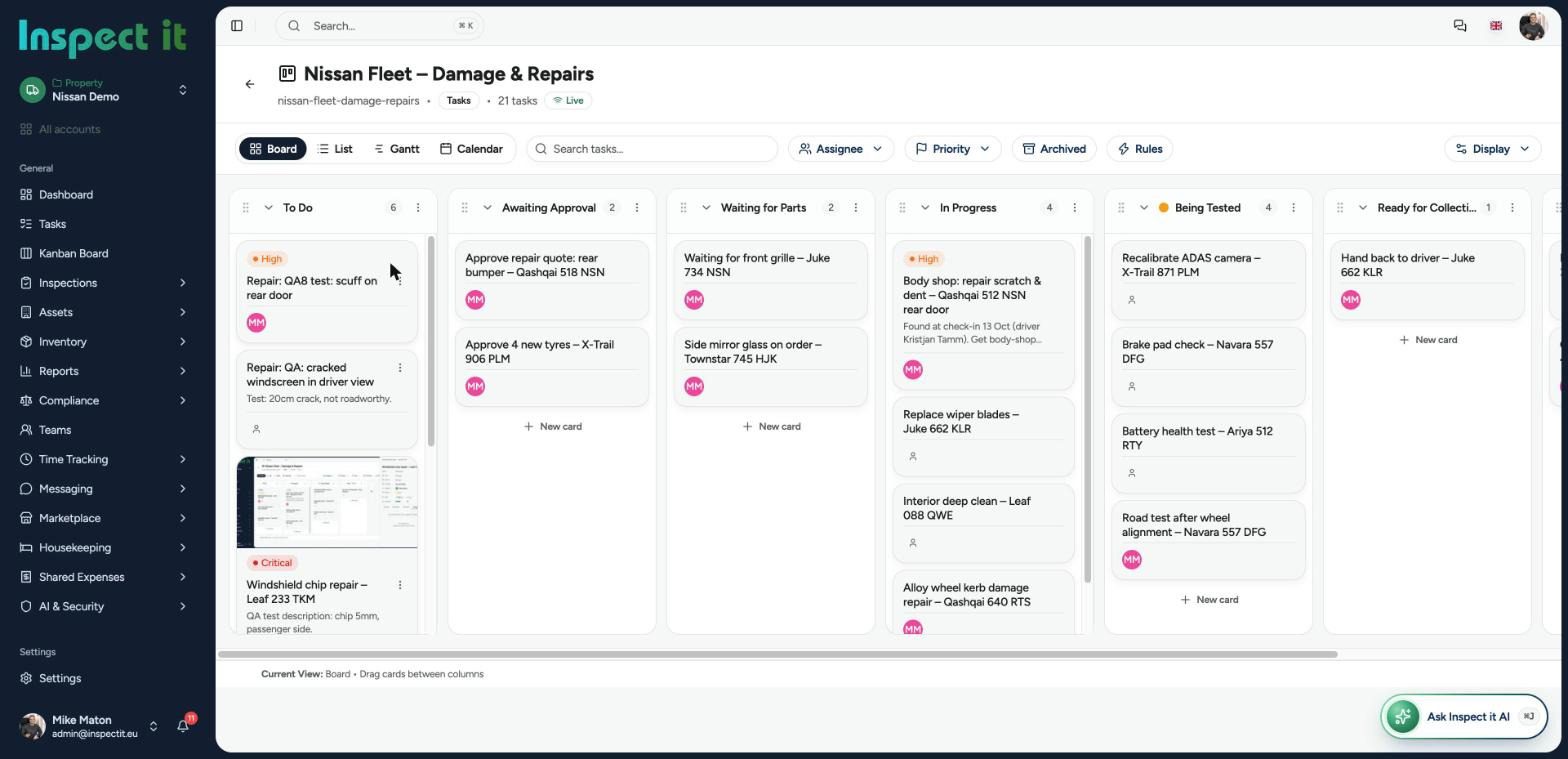
Roofs deteriorate slowly, and the only way to see slow change is to compare like with like. Use the same roof inspection checklist and take the same photos from the same places each time. In Inspect it the roof template is saved once, each inspection is stored against the building, and findings become tasks with an owner and a date. The building inspection software guide explains the approach, and the commercial building inspection checklist covers the rest of the building.
Frequently asked questions
How often should a commercial roof be inspected?
Twice a year, in spring and autumn, and after severe storms. Roofs with a lot of plant or foot traffic, or older membranes, may need more frequent checks.
What are the most common roof problems found on inspection?
Blocked outlets and gutters, failed flashings and sealant, splits or open laps in the membrane, damage around roof plant and penetrations, and slipped or broken tiles on pitched roofs.
Can a roof inspection be done without going on the roof?
Partly. The top floor interior, the view from hatches and upper windows, binoculars from the ground and drone images cover much of the checklist. Areas that cannot be seen safely should be recorded as not inspected.
See it on one of your own buildings
Run one real inspection with us and get the finished report before the call ends.