

This fire extinguisher inspection checklist is the monthly visual check that the people responsible for a building do themselves. It takes under a minute per extinguisher once you know the route.
The monthly check does not replace the annual service by a qualified technician. Its job is to catch what happens between services: an extinguisher that has been moved, used, knocked or hidden behind a delivery. Check intervals and servicing standards are set nationally, so confirm the requirement for your country and insurer.
Set up a register first
You cannot check extinguishers you have not counted. Walk the building once and list each unit.
| ID | Location | Type | Size | Last service | Next service |
|---|---|---|---|---|---|
| EX-01 | Ground floor, reception, by exit | Water | 6 L | ||
| EX-02 | Ground floor, kitchen | Wet chemical | 6 L | ||
| EX-03 | Level 1, server room door | CO2 | 2 kg |
Put the ID on the extinguisher and on the wall behind it. Then a missing unit is obvious.
The fire extinguisher inspection checklist
Location and access
| Check | Pass | Fail | Notes |
|---|---|---|---|
| Extinguisher is in its designated position | ☐ | ☐ | |
| Mounted on bracket or stand, not on the floor | ☐ | ☐ | |
| Visible, not hidden by furniture, stock or doors | ☐ | ☐ | |
| Access clear for at least one metre | ☐ | ☐ | |
| Location sign in place above the unit | ☐ | ☐ |
Condition
| Check | Pass | Fail | Notes |
|---|---|---|---|
| Pressure gauge needle in the green zone (not applicable to CO2) | ☐ | ☐ | |
| Safety pin fitted and tamper seal unbroken | ☐ | ☐ | |
| No dents, rust, leaks or damage to the body | ☐ | ☐ | |
| Hose and nozzle attached, uncracked and unblocked | ☐ | ☐ | |
| Operating instructions legible and facing outward | ☐ | ☐ |
Service status
| Check | Pass | Fail | Notes |
|---|---|---|---|
| Service label present and in date | ☐ | ☐ | |
| Type is right for the risk in that area | ☐ | ☐ |

When an extinguisher fails the check
| Finding | Action |
|---|---|
| Missing from its position | Find it or replace it the same day. Record where it was found. |
| Gauge outside green, pin missing or seal broken | Treat as used. Take out of service and call the service contractor. |
| Blocked or hidden | Clear it now. If it keeps happening, move the storage, not the extinguisher. |
| Damage or corrosion | Remove from service and replace. |
| Service overdue | Book the service. Keep the unit in place unless it has also failed another check. |
Why the monthly check gets skipped
It is short, it is dull, and it almost always passes. That is exactly why it drifts from monthly to “when we remember”. Two things keep it alive: a fixed route with every unit numbered, and a record that shows at a glance which month was missed.
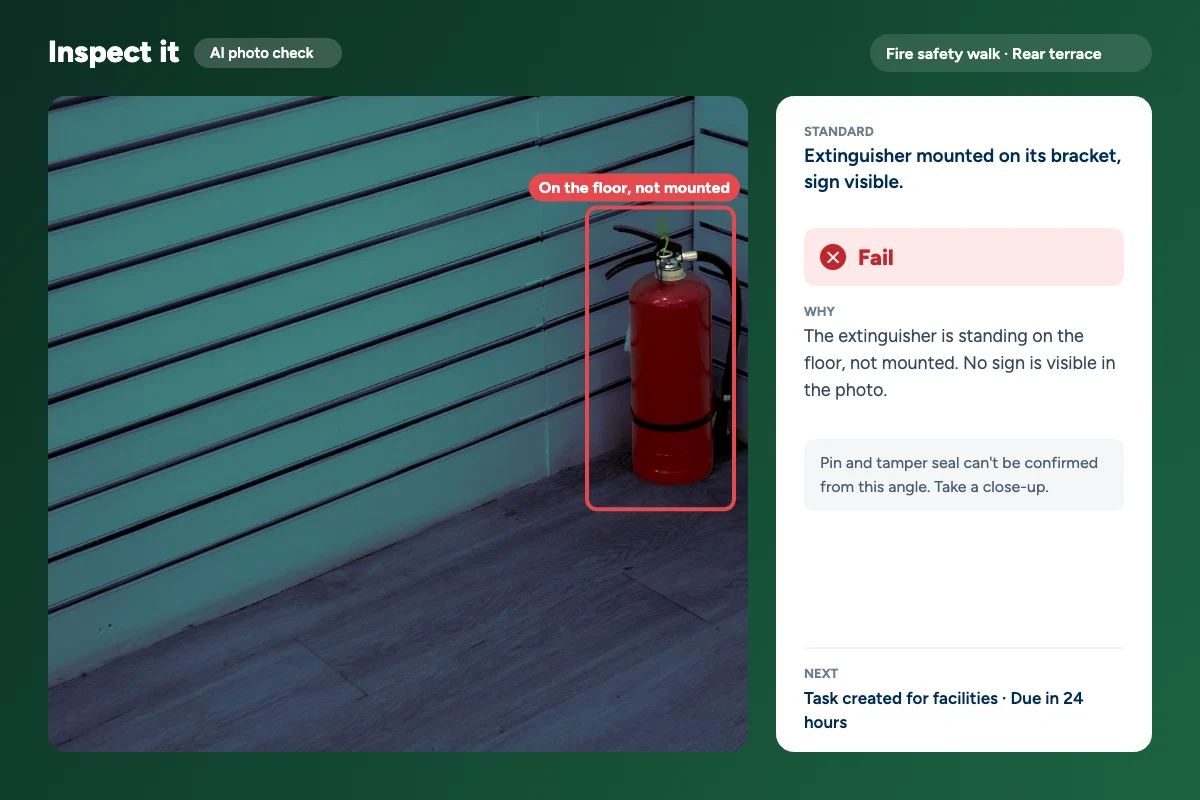
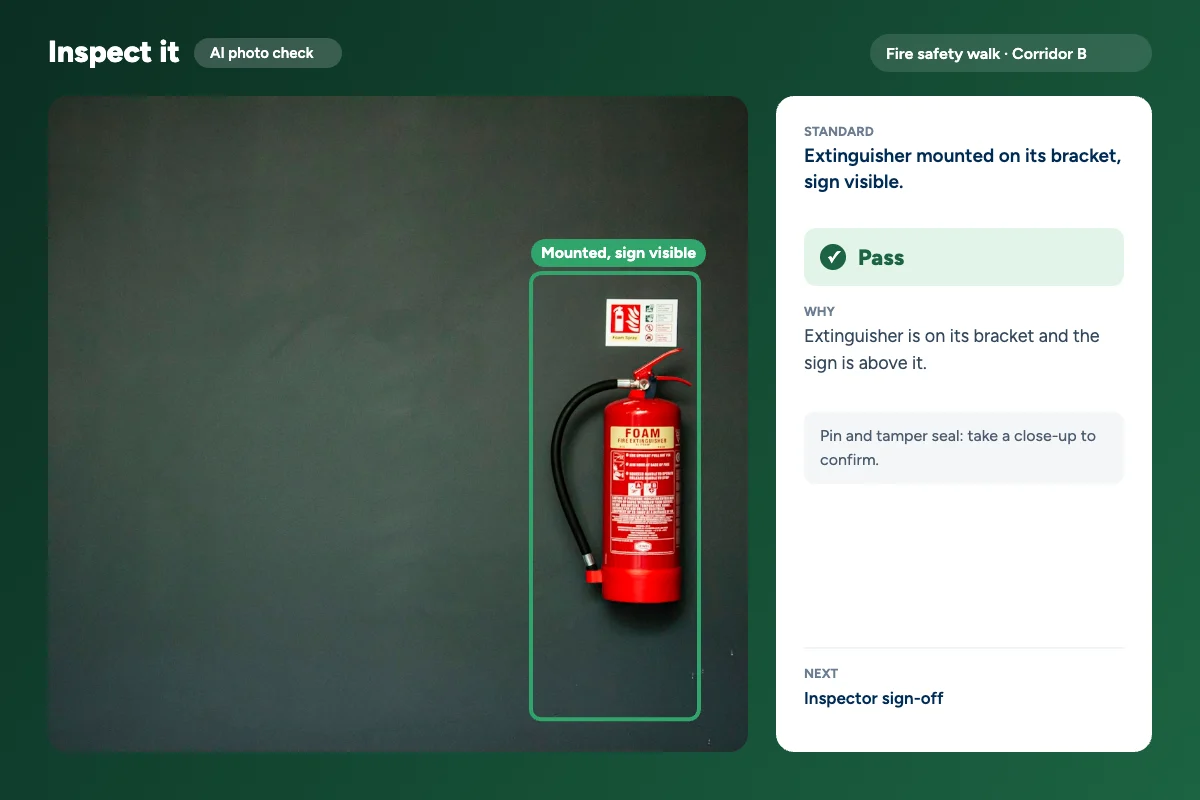
In Inspect it each extinguisher can be registered as an asset, the monthly check is scheduled, and a fail becomes a task with the photo attached. Our asset inspection software guide explains how asset registers and scheduled checks fit together. For the doors on the same walk-round, use the fire door inspection checklist, and for the whole building the commercial building inspection checklist.
Frequently asked questions
How often should fire extinguishers be inspected?
A visual check is commonly done monthly by the people responsible for the building, with a full service by a qualified technician once a year. Confirm the interval required in your country.
What should a monthly fire extinguisher check include?
Position, mounting, visibility and access, pressure gauge, pin and tamper seal, body condition, hose and nozzle, legible instructions and an in-date service label.
Who can carry out the monthly check?
Any trained member of staff can do the monthly visual check. Servicing, refilling and repairs must be done by a qualified technician.
See it on one of your own buildings
Run one real inspection with us and get the finished report before the call ends.