
Share article
Key takeaways
Reading time: 5 minutes
AI can’t replace the human element of the risk assessment process.
Risk data goes stale faster than most teams realize, and AI is what keeps it current.
A logged near-miss means nothing if nobody acts on it; AI makes sure someone does.
The real problem is not collecting more data
Inspection teams already collect large amounts of data. They capture photos, notes, ratings, signatures, readings, defects, comments and supporting files. Many organisations now use digital forms rather than paper, but digitising a form does not automatically improve the process around it.
A digital report can still sit unread. A flagged issue can still go unassigned. A serious defect can still appear in several reports without anyone seeing the wider pattern.
The issue is not a lack of evidence. The issue is what happens after the evidence has been captured.

This is where AI can support a stronger inspection process. It can review large volumes of inspection data faster than a person can. It can highlight repeated defects, identify missing information, group similar findings and help teams focus on the issues that need attention first.
It can also help turn inspection findings into clear next steps. That is where the real value starts.
AI should support judgement, not replace it
Inspectors understand context. They know when a crack looks cosmetic and when it needs further investigation. They understand when a tenant comment matters, when equipment sounds wrong and when a site condition feels unsafe before the full evidence is available.
AI does not replace that experience. It supports it.
A well-designed system can help the inspector by preparing descriptions, summarising findings, checking for missing fields, comparing current results with previous inspections and identifying patterns across multiple assets or locations.
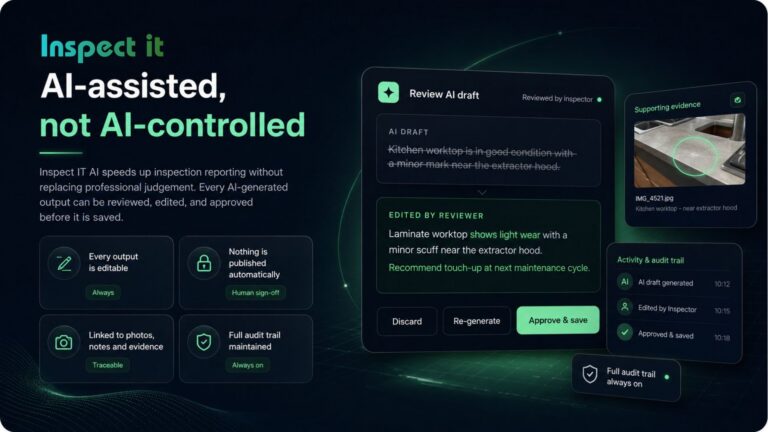
The inspector still reviews the output, the manager still decides what action to take and the organisation still owns the final decision.
This human review remains essential. AI-generated content should always be treated as a draft. It should be possible to edit it, reject it or replace it completely.
Good inspection software keeps accountability with the person while reducing the administrative work around them.
Risk data becomes outdated quickly
An inspection report captures conditions at a specific moment, but conditions change.
A small leak becomes water damage. A damaged cable becomes exposed. A minor crack expands. A repair remains incomplete. An asset continues operating beyond its service date.
Teams often believe their inspection records are current because the last inspection was completed recently. In reality, the information may already be out of date.
This becomes more serious when inspections happen across multiple buildings, vehicles, machines, vessels or work sites. Manual reviews take time, reports arrive in different formats, photos may not follow a standard structure and tasks may sit in separate systems.
AI can help reduce the gap between what your records say and what is happening now. It can compare new findings against previous inspection results, identify repeated issues, highlight assets where condition ratings are getting worse and show when the same type of defect appears across several locations.
This helps teams move away from isolated reports and towards continuous oversight.

A finding only matters when someone acts on it
One of the biggest weaknesses in inspection management is the gap between reporting an issue and resolving it.
A report may clearly identify a defect, but the process stops there. Someone still needs to create the task, assign the owner, set the deadline and check whether the work was completed.
When these steps depend on email, spreadsheets or memory, issues get missed.
AI can help structure the follow-up process. It can suggest a priority based on severity, recommend the type of action required, create a draft task and alert the right team. It can also keep the issue visible until it has been reviewed or resolved.
This does not remove the need for human control. It removes the need to repeatedly transfer information between systems.
The result is a clearer route from finding to action.
Start Inspecting
See it run across your Inspections
See how Inspect IT works for facility management teams, or start exploring the platform yourself
AI can reveal patterns that individual reports cannot
A single inspection report provides a limited view. It shows what happened in one place at one time.
The wider risk often appears only when several reports are reviewed together.
One damaged fire door may look like an isolated repair. Five similar findings across the same portfolio may point to a maintenance, supplier or compliance issue.
One failed pump may be normal wear. Repeated failures across the same model may suggest a deeper equipment problem.
One complaint about damp may seem local. Similar reports across several apartments may reveal a building-wide issue.
AI can help identify these patterns by reviewing data across inspections, locations, templates and time periods. This gives managers a broader view of risk and helps teams move from reacting to individual defects towards preventing repeated problems.
What AI-assisted inspections should look like
AI works best when it supports a clear inspection process.
The organisation first defines what is being inspected, what evidence is required and what decisions the inspection should support. The inspector then captures structured information on site, including photos, condition ratings, notes, measurements and supporting documents.
AI can then help organise and analyse the evidence. It can draft descriptions, summarise findings, highlight missing information and identify possible risks.
A person reviews the output and confirms what belongs in the final report. The system can then connect the findings to tasks, follow-up inspections, notifications or wider reporting.
The process remains controlled by people. AI makes the process faster, more consistent and easier to manage.
How Inspect IT supports this approach
Inspect IT is built around a simple principle. Inspection data should lead to clear outcomes.
Teams should be able to capture evidence once, structure it properly, review it with confidence and use it to support action.
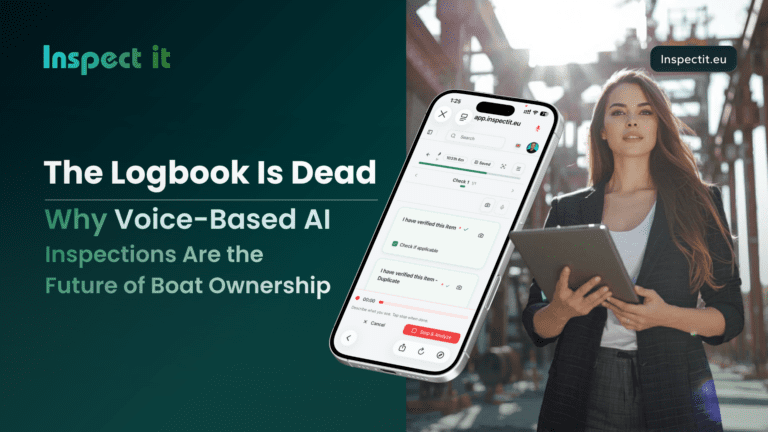
Inspect IT AI can help generate report content from photos, notes, voice input and inspection fields. It can prepare descriptions, summaries and structured findings for human review.
It can also help teams compare results, identify trends and reduce the time spent turning site data into professional reports.
The goal is not to remove inspectors from the process. The goal is to give them better tools.
Inspectors should spend less time rewriting notes, copying information, organising images and preparing repetitive sections. They should spend more time inspecting, reviewing, deciding and improving.
Better inspections need better follow-through
AI has not created the weaknesses in inspection management. It has made them easier to see.
Reports have always been missed, tasks have always been delayed, evidence has always been scattered and risk data has always become outdated.
The difference now is that teams have better tools to reduce these gaps.
AI can support faster reporting, stronger consistency, clearer prioritisation and better follow-up. But it only works when it sits inside a well-designed process with human review and clear accountability.
The future of inspections is not about letting AI make every decision. It is about making sure important evidence does not disappear inside another report.
Inspect IT helps teams turn inspection data into clear, actionable outcomes.