

Inspection reporting should not take longer than the inspection itself.
But for many teams, it does. The site visit is finished. The photos are taken. The notes are captured. The main issues are clear. Then the admin begins.
AI-assisted inspection reporting helps teams turn photos, notes and voice comments into a finished report far faster than writing it by hand.
Reports need to be written. Photos need to be matched to the right findings. Notes need to be cleaned up. Recommendations need to be explained in a way that makes sense to property managers, landlords, tenants, contractors and internal teams.
That work matters. It also takes time.
The key point is simple.
AI can help write the first draft, but it should not make the final decision.
Inspection work needs judgement. A photo can show damage, but a person still needs to decide how serious it is. A note can describe a problem, but someone still needs to understand the room, the history, the risk and the right next step.
That is why Inspect it AI works as an assistant.
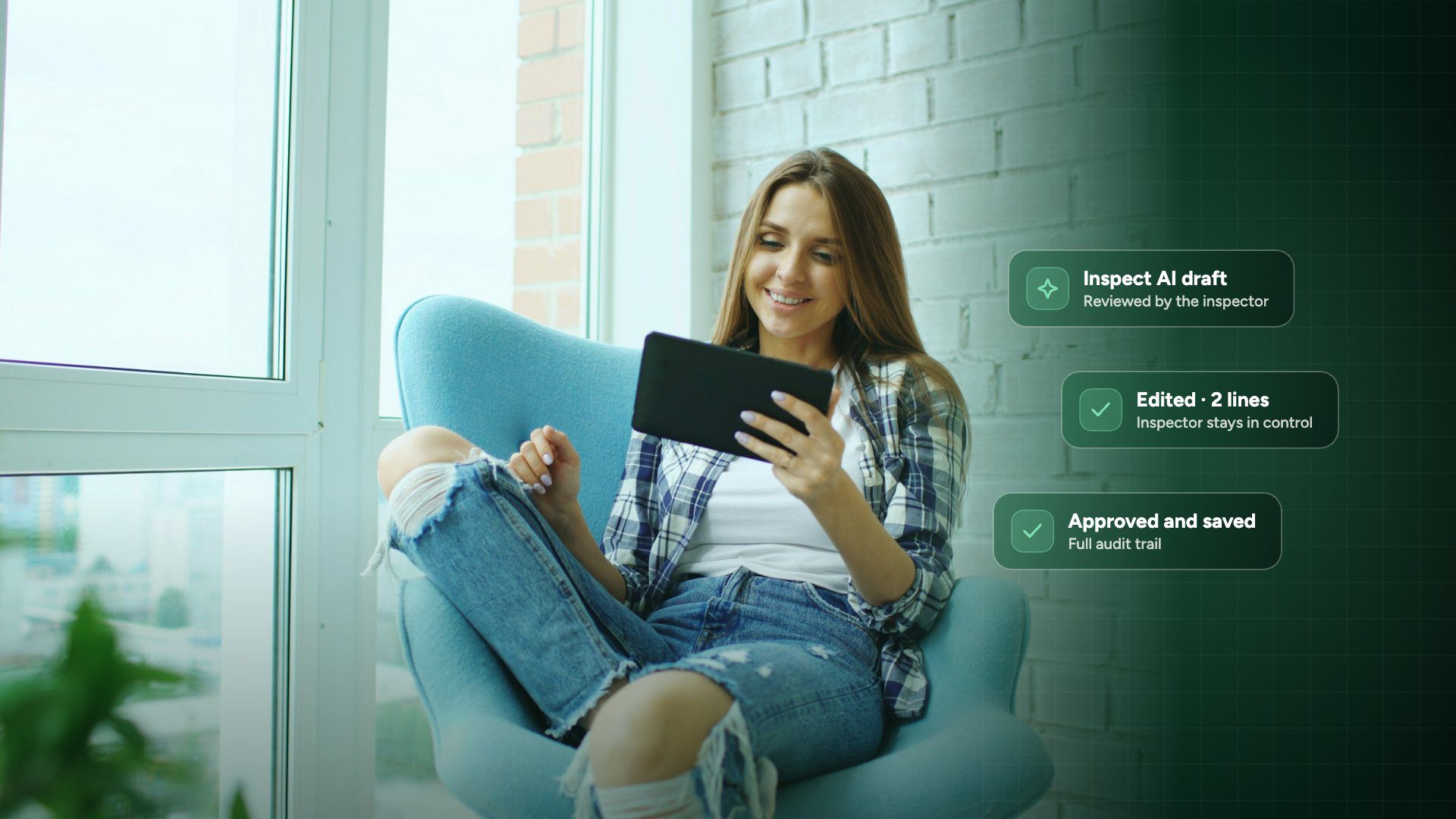
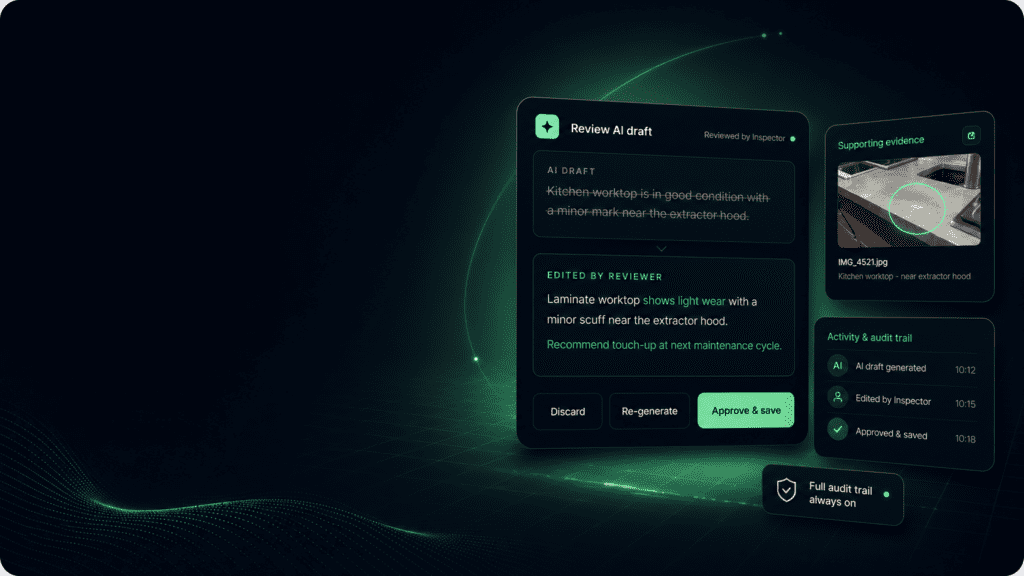
It helps prepare the content. The inspector reviews it, edits it and approves it before anything becomes part of the final report.

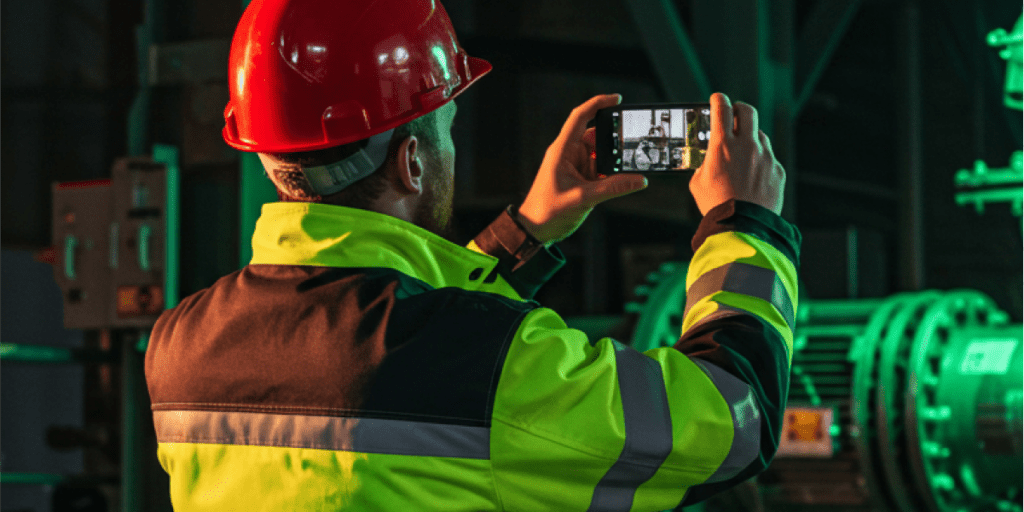
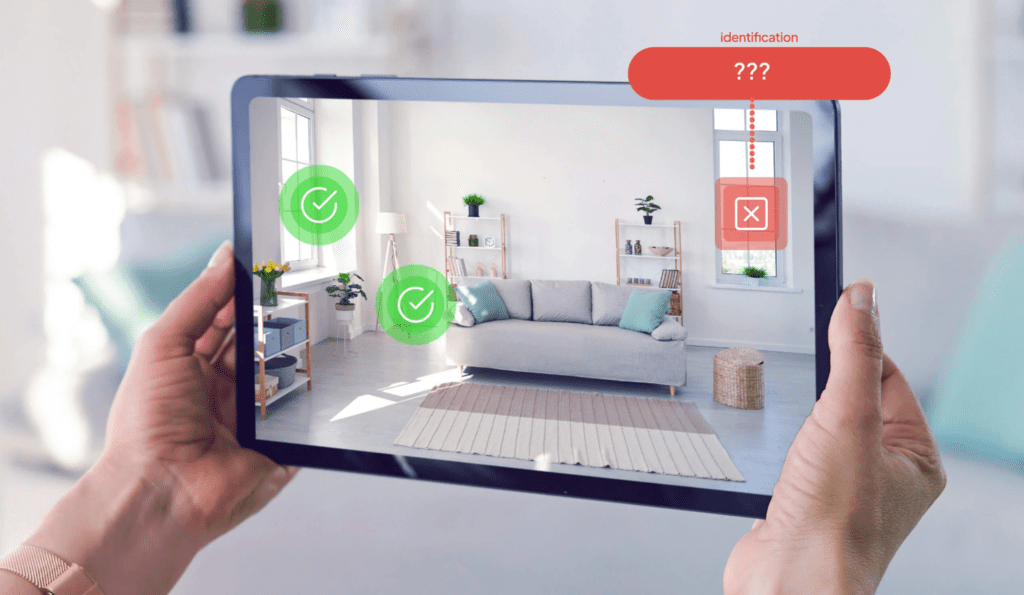
One of the clearest examples is photo reporting.
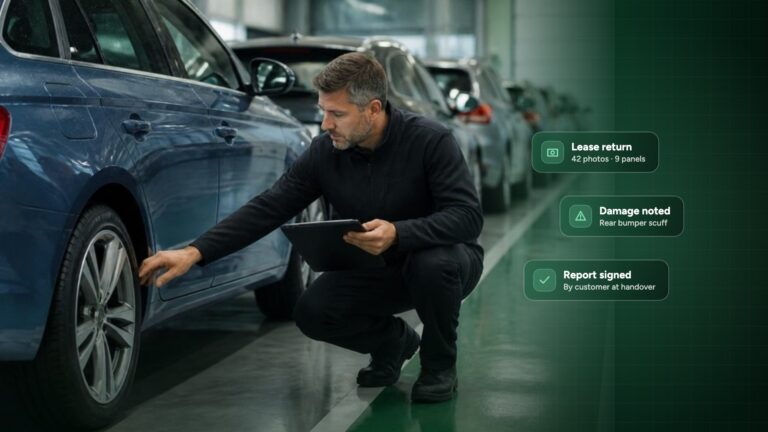
Photos are often the strongest evidence in an inspection. They show what was found and help support the final report. They also help contractors understand the issue and give managers a better record if something is questioned later.
But photos still need explanation.
A damaged wall, marked worktop, leaking fitting or worn floor needs a clear written description. Someone has to explain what the photo shows, where the issue is and what may need to happen next.
Inspect it AI can help create that first description from the inspection evidence. The inspector can then check the wording, adjust the detail and approve it.
This saves time, especially when a report contains many photos.
It also helps make reports more consistent.
When several inspectors work across many properties, reports can start to feel different from one person to another. One inspector may write long descriptions. Another may write short notes. Another may miss useful context because they are moving quickly between jobs.
AI gives the team a stronger starting point.
It does not make every report sound the same. It helps make the basics clearer, the structure stronger and the review process faster.
Inspect it AI can also help with summaries.
A full report needs detail, but not every reader wants to start with every finding. A landlord may want the overall condition. A property manager may want the urgent issues. A contractor may need the repair details. A senior manager may want the main risks across several buildings.
AI can help turn the inspection data into a clear summary, so the report is easier to understand from the first page.
The detail stays in the report. The evidence stays connected. The reader simply gets to the important points faster.
Inspection history is another important part of the workflow.
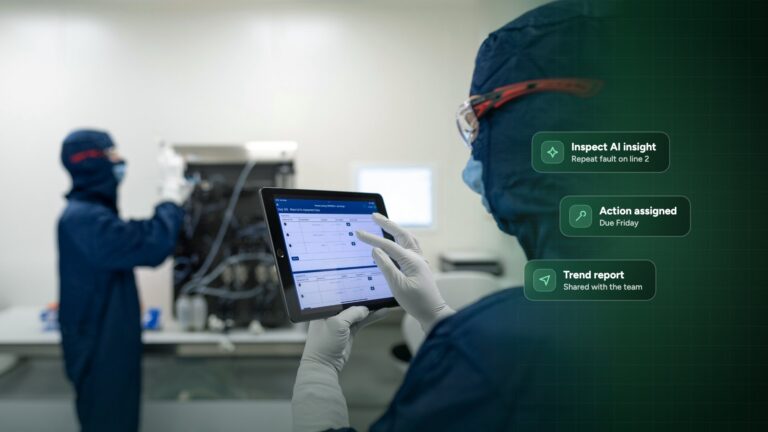
Many teams return to the same properties, rooms, assets and equipment again and again. Previous findings, old defects, completed repairs and open tasks can all be useful during the next inspection.
Inspect it AI can help bring that context into the workflow.
Instead of starting each inspection from nothing, the inspector can see what has changed, what still needs attention and what should happen next.
That is where inspection software becomes more valuable. It stops being only a place to store reports and becomes a working record of the property, building or asset over time.

Inspect it Voice
Voice notes also make a real difference.
Typing on site is not always easy. Inspectors may be moving between rooms, checking equipment, taking photos or speaking with tenants and contractors. It is often faster to say what you see.
Inspect it AI can help turn spoken notes into clean report content. The inspector still reviews the final wording, but they no longer need to start from a rough note later in the day.
The same thinking applies to old reports and templates.
Many businesses already have report formats they trust, but those formats often live in PDFs, Word documents or spreadsheets. Inspect it AI can help turn existing reports into reusable digital templates, so teams can keep the structure they understand while making the process easier to manage.
The goal is simple.Capture the evidence once. Use it properly. Turn findings into action.
If something needs fixing, it becomes a task. If it needs checking again, it can be scheduled. If there is a risk, the right people can see it.
Human review stays at the centre.
Every AI-generated output is a draft. The inspector can edit it, improve it or reject it. Nothing becomes part of the final report until it has been reviewed.
That keeps trust in the report.
It also keeps accountability where it belongs.
AI should make inspection reporting faster, clearer and easier to manage. It should not make the process less transparent.
That is the balance Inspect it AI is built for.
It helps teams reduce admin, improve consistency and turn inspection data into reports, records and actions.
All while keeping professional judgement with the inspector.
The Value of AI-Assisted Inspection Reporting
With AI-assisted inspection reporting, inspectors review and approve the report instead of writing it from scratch, keeping human judgement at the centre.
Explore next: AI inspection software (Inspect AI). See how Inspect AI turns inspection photos and voice notes into finished reports your team reviews and approves.